| |
Member Search
By User Name
By State
|
|
|
|
|
|
|
|
 |
|
 |
|
|
Click here to Get the FREE software NOW!
|
A Deer Movement Predictor,
hunting logger/analyzer,
harvest logger, Photo Manager,
Topo Map Generator, and a
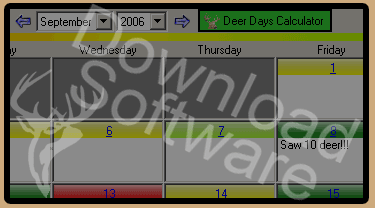
calender all in one! Hunt on days that you have the best chance of seeing deer, record details of your hunts so that your data produces the best location
for the current conditions to hunt, manage every aspect of your herd, and keep your day to day schedule on the calendar.
Quality wildlife management software. How do I download and install the software?
|
When you download the DeerDays software, you get the HUNTING LOGGER, HARVEST LOGGER, PHOTO MANAGER, and the CALENDER to keep
track of your day to day schedule, and 6 REPORTS all for free!
You can also
sign up for a Free Membership, which will allow you to post a reply on the
forums, DeerDays Comments, add pictures and
comments to the photogallery,
and use the Buy & Sell
Section.
To become a Free member Click Here or click on the Membership
link on the left hand side.
| When you sign up to be a silver member you get an activation key
for the DeerDays Calculator
Movement Predictor to tell you the best days to hunt deer on, the Deer Days Analyzer to analyze your collected data for correlations, and Deer Days Trend Analysis to show any trends in your past hunting data. To become a Silver member Click Here or click on the Membership link on the left
hand side. The reports you get with the silver membership are great for people that are
looking for wildlife management software. |
| When you sign up to be a gold member you get all the benefits of being a Silver
member plus you get an activation key
for the DeerDays Mapper And DeerDays Time Calculator to help you track those hard to get bucks. This program also allows you to download
as many maps as you want at any time. To become a Gold member Click Here or click on the Membership link on the left
hand side. This is the best chose if you are looking for wildlife management software
with mapping abilities. |
|
|
 |
|
 |
|
|
|